Materials · 5 min read ·
PLA vs PETG vs ABS: Which 3D Printing Material Should You Choose?
PLA, PETG and ABS compared for detail, toughness, heat, outdoor use and cost, with a simple rule for picking the right plastic for your 3D printed part.
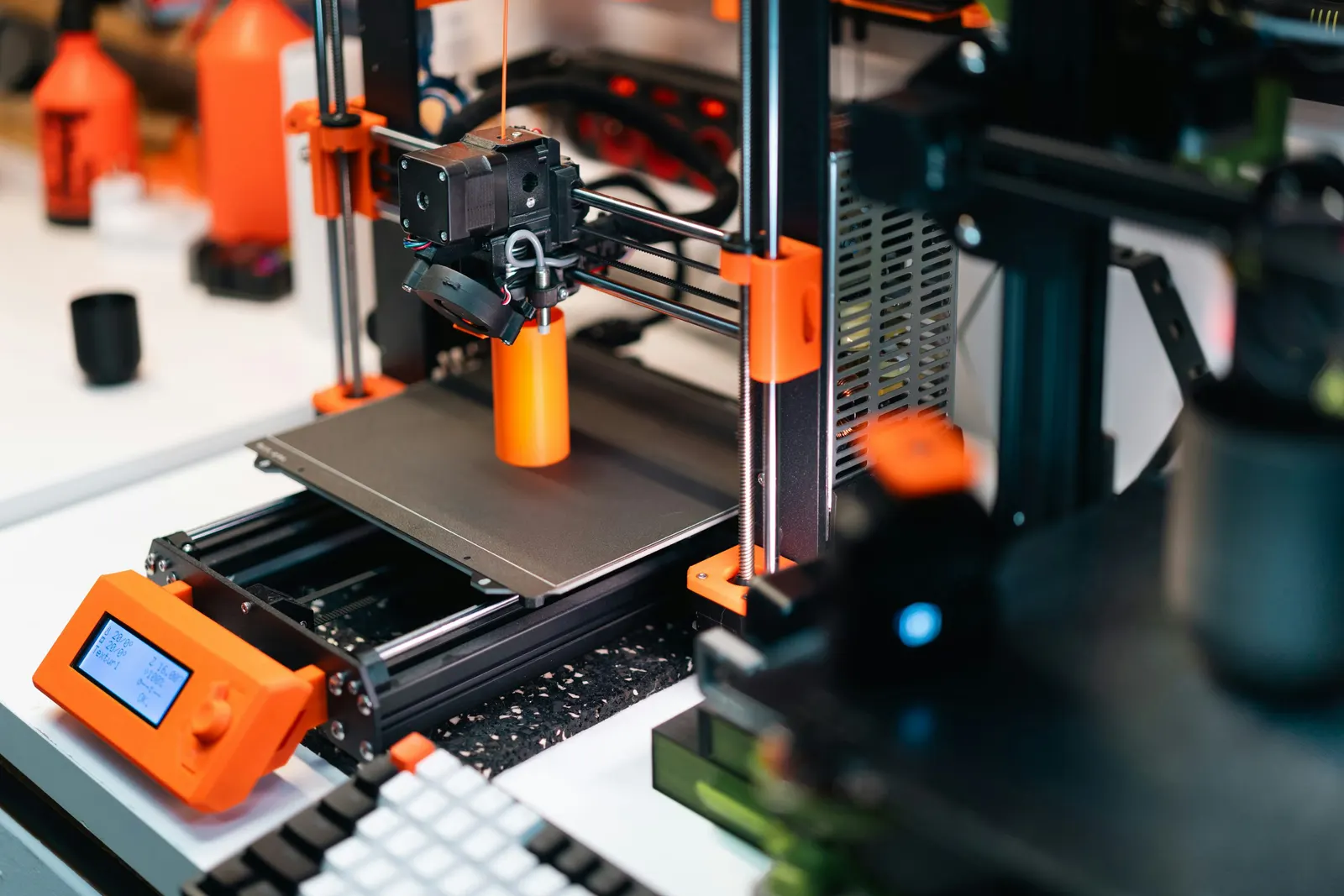
PLA, PETG and ABS are the three plastics behind most filament 3D printed parts. They look similar on the spool, but they behave very differently once the part is in use. Choosing the right one is usually more important than any print setting. Here is how they compare, and the simple rule we use to pick between them.
The short answer
- PLA for models, prototypes, display pieces and anything that stays indoors and away from heat.
- PETG for functional parts: enclosures, brackets, clips and things that get handled, bumped or used outdoors part of the time.
- ABS for parts that get warm: car interiors, parts near motors, lamps or electronics that run hot.
Side by side
| PLA | PETG | ABS | |
|---|---|---|---|
| Detail and surface | Best | Good | Good |
| Toughness (impact) | Brittle under impact | Tough, slightly flexible | Tough |
| Heat | Softens in a hot car or direct sun | Handles warm conditions | Best of the three |
| Outdoors and moisture | Indoor use | Good | Good, can fade in strong sun |
| Colour range | Widest | Good | Good |
| Cost | Lowest | Low | Low |
These are practical comparisons from everyday use, not lab figures. Real performance depends on the exact grade, the design and how the part is printed.
PLA: sharp, easy and economical
PLA prints crisp edges and fine detail, comes in the most colours and is the most economical of the three. That makes it the default for architectural models, look-and-feel prototypes, decor, figurines and gifts. Its weakness is heat: left on a car dashboard in a Delhi summer, a PLA part can soften and warp. It is also more brittle, so thin clips and snap-fits may crack rather than bend.
PETG: the everyday engineering plastic
PETG is tougher and slightly flexible, so it bends a little before it breaks. It copes with moisture and warmth better than PLA, which is why it suits product enclosures, brackets, mounts, clips, cable organisers and parts that get handled every day. Surfaces are slightly glossier and fine detail a little less crisp than PLA, which rarely matters on a functional part.
ABS: for parts that get hot
ABS handles the most heat of the three. Choose it for car interior parts, housings near motors or lamps, and electronics that run warm. It is also the material many injection-moulded products are made from, so it is a natural choice for a prototype that will later be moulded. ABS needs careful printing to avoid warping on larger parts, which is our job, not yours.
When none of the three is right
- It needs to flex or grip: TPU, a rubber-like material for gaskets, bumpers, feet and grips.
- It needs very fine detail: resin, for miniatures, jewellery masters and small precise parts.
- It needs to be strong with no support marks: SLS nylon, for tough functional parts and small batches.
- It needs to be metal: stainless steel or aluminium by metal 3D printing, or CNC machining for simpler shapes.
Our rule of thumb
Start with what the part has to survive. If the answer is “nothing much”, PLA. If it gets handled, bumped or sits outside, PETG. If it gets hot, ABS. Still unsure? Our materials guide has a five-question quiz, or tell us on WhatsApp what the part is for and we will recommend the material in the quote.
Questions people ask
Is PETG stronger than PLA?
PETG is tougher: it bends slightly before breaking, where PLA tends to snap. PLA can feel stiffer, but for parts that get handled, bumped or clipped together, PETG usually lasts longer.
Which filament is best for a part in a car?
ABS, because it handles heat best of the three. PLA can soften on a dashboard in summer. Tell us where in the car the part sits and we will confirm the grade.
Which is cheapest?
PLA is usually the most economical, with PETG and ABS close behind. The material is often a smaller share of the price than print time and finishing.