Pricing · 6 min read ·
How Much Does 3D Printing Cost? What Decides the Price in Delhi
What really decides the price of a 3D printed part: material, print time, detail, finishing and quantity, plus five practical ways to bring the cost down.
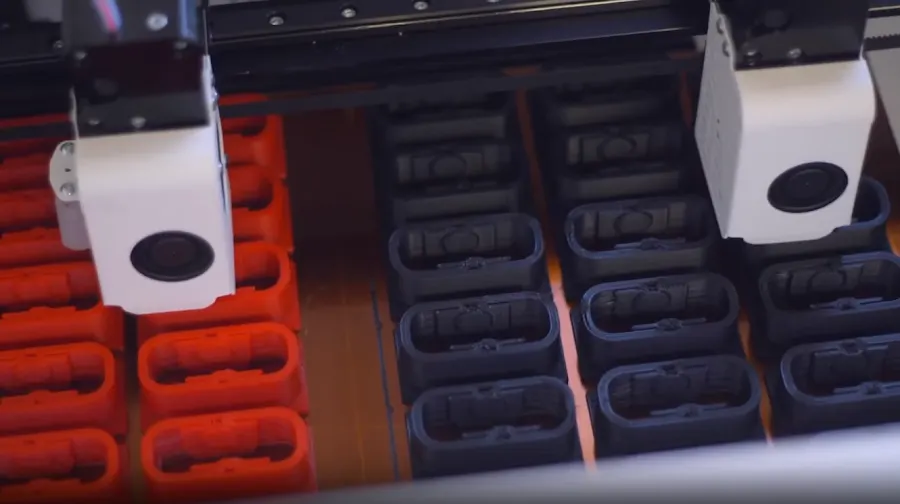
“How much will it cost to print this?” is the first question almost everyone asks, and the honest answer is that it depends on the part. Two objects that look the same size in a photo can be very different jobs. This guide explains what actually decides the price of a 3D printed part, so you can read a quote properly and make changes that bring the cost down.
The six things that decide the price
1. How much material the part uses
Price follows volume, not the size of the box the part fits in. A hollow lamp shade and a solid block with the same outside dimensions use very different amounts of plastic. On filament (FDM) printers, most parts are printed with a solid outer skin and a lighter internal pattern called infill, which keeps material and time down without making the part weak for everyday use. Parts that must carry real load get more walls and denser infill, and cost more.
2. How long it sits on the printer
Machine time is usually the biggest part of the cost. It grows with the height of the part (every layer takes time), the layer height you need, and how much support material has to be printed under overhangs. A part laid flat often prints far faster than the same part standing upright.
3. The material
PLA is the most economical everyday plastic. PETG and ABS cost a little more and are chosen for toughness and heat. TPU (flexible), resin (fine detail) and SLS nylon (strong, no supports) cost more again, and metal printing in stainless steel or aluminium is a different price bracket altogether. Our materials guide compares them side by side.
4. Detail and accuracy
Fine layers look smoother but take longer. For a display model or a part people will hold, that is worth it. For a bracket inside a machine, a standard layer height does the job at a lower price. If certain features must fit precisely, such as holes for bearings or a snap-fit, tell us which ones so we can control those without slowing the whole part down.
5. Finishing
A part straight off the printer has visible layer lines and small marks where supports were removed. Sanding, priming, painting or inserting threaded brass inserts all add labour. Many functional parts need no finishing at all.
6. Quantity
One part carries all of the setup work: checking the file, choosing orientation, slicing and first-layer checks. Ten identical parts share that work, and several can often print in the same run, so the price per piece usually drops as the quantity goes up. For runs from about ten to a few hundred, see batch production.
What if you don’t have a 3D file?
That is common, and it is not a problem. If you have a sketch, a photo with a few measurements, or a broken part, we can model it in Fusion 360 first. CAD time is quoted separately from printing, and you keep the STEP and STL files afterwards, so a reprint later only costs the print. More on that on our CAD and prototyping page.
Five ways to bring the cost down
- Say what the part has to do. “Holds a 2 kg load” or “sits on a desk” lets us pick the lightest settings that will still work.
- Hollow out decorative parts. Models, figurines and display pieces rarely need to be solid.
- Avoid needless overhangs. Chamfers instead of flat ceilings and splitting a part into two pieces can cut support material sharply.
- Start in PLA or PETG. Prove the design in an everyday material, then move to an engineering plastic or metal for the final version.
- Order the quantity you will need. If you know you need five, quoting for five is cheaper per piece than ordering one at a time.
When 3D printing is not the cheapest option
Printing wins for complex shapes, one-offs and small batches because there is no tooling. For simple, blocky metal parts, CNC machining is often cheaper and more accurate. For flat parts from sheet, laser cutting is usually faster. Because we do all of these, we will tell you when another process suits your part better. Read CNC machining vs 3D printing for how we decide.
How to get an accurate quote quickly
Send these on WhatsApp and you will usually get a clear, itemised quote the same day:
- The STL or STEP file, or a sketch or photo with key measurements
- What the part is for and where it will be used
- How many you need, and by when
- Any colour or finish you have in mind
You don’t need to visit our workshop. Most jobs are quoted, approved and delivered without a single meeting, anywhere in Delhi NCR and across India.
Questions people ask
Why can't you give a fixed price per gram?
Weight is only one factor. Print time, supports, layer height, finishing and quantity often matter more, so two parts of the same weight can cost quite differently. A quote from the actual file is the only accurate number.
Is it cheaper to print several parts at once?
Usually, yes. Setup work is shared across the batch and several parts can print in the same run, so the price per piece normally drops as quantity rises.
Do I need a 3D file to get a quote?
No. A sketch, a photo with measurements or the broken part itself is enough to start. If CAD modelling is needed, it is quoted separately and you keep the files.